What Is Call Tracking? A Plain-English Guide for Lead-Gen Agencies
Call tracking is software that ties every inbound phone call back to the marketing that drove it. Here is how DNI, tracking numbers, attribution, and routing work.

Rafael Hernandez
Founder & CEO
Ex-Microsoft SWE · $10M+ PPL ad spend
I hope you enjoy reading this blog post. If you want to try Lead Distro AI for free, click here.
Author: Rafael Hernandez | Founder & CEO of Lead Distro AI
Last Updated: June 4, 2026
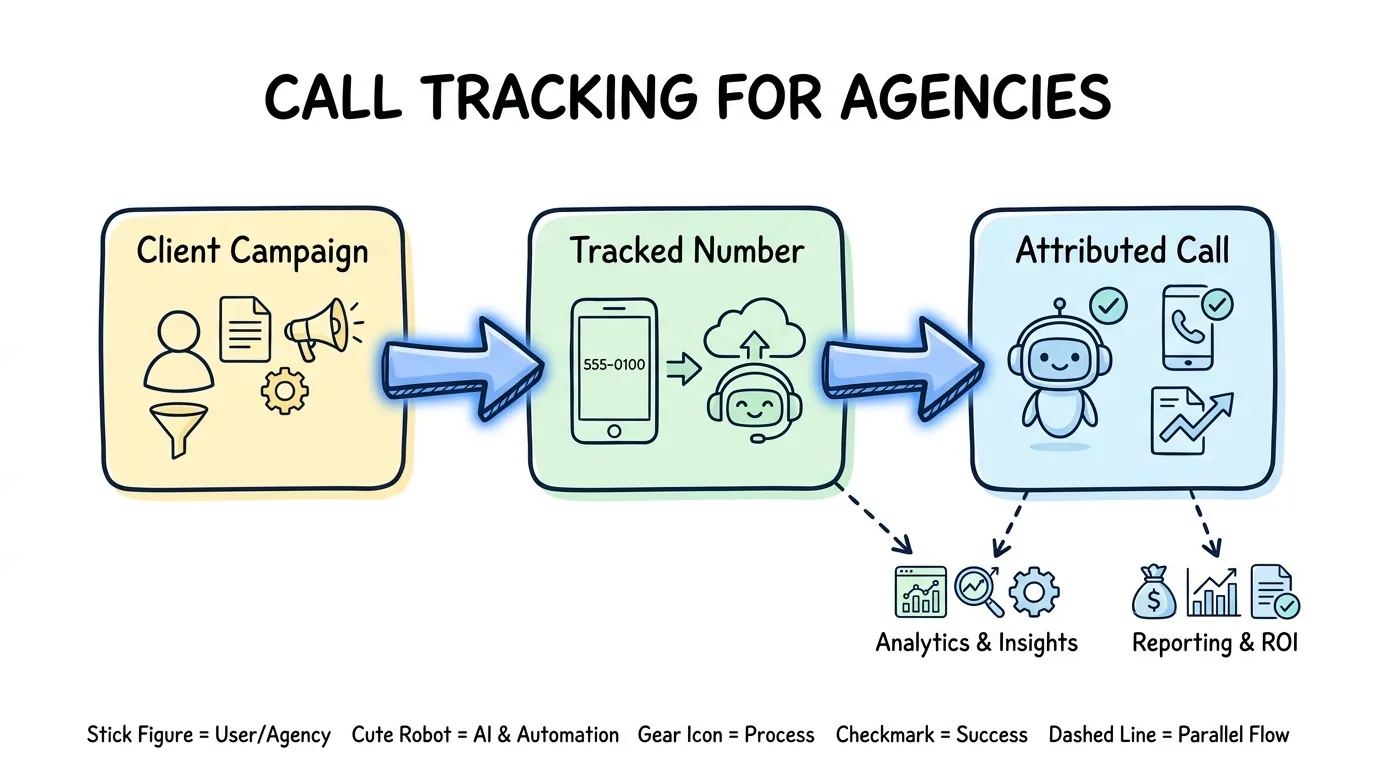
Call tracking is software that connects every inbound phone call back to the marketing that made the phone ring. It assigns unique phone numbers to your ads, landing pages, and traffic sources, then records which campaign, keyword, or channel each caller came from the moment they dial. For a lead-generation agency, that link is the whole game: it tells you which ad spend produces real, billable phone calls instead of guessing. A good call tracking platform captures the call, logs the source, records the conversation, measures duration, and (in pay-per-call setups) routes the live caller to the right buyer in real time.
This matters because phone leads convert far better than form fills. According to Invoca's digital marketing statistics, which cite BIA/Kelsey and Forrester research, inbound calls convert to revenue 10 to 15 times more often than web leads, and callers convert 30% faster. When a single qualified call can be worth $40 to $200, knowing exactly which campaign produced it is the difference between scaling profitably and burning budget. This guide explains what call tracking is, how it works, and why pay-per-call agencies build their whole business on it. If you also distribute the calls you capture, see how call routing software sends each one to the right buyer, and start your 7-day free trial to see tracking and routing in one place.
Key Takeaways
- Call tracking ties every inbound call to its marketing source using unique phone numbers, so you know which campaign, keyword, or channel produced each call.
- Dynamic Number Insertion (DNI) swaps the number on your website based on how each visitor arrived, giving session-level attribution down to the exact keyword.
- Inbound call tracking captures source, duration, recording, and outcome, the data agencies need to prove call quality and invoice buyers accurately.
- Pay-per-call agencies rely on call tracking plus routing to qualify a live caller and connect them to a buyer in under a second.
- Call tracking pricing is usage-based: a per-number monthly fee plus a per-minute rate for inbound calls, layered on top of the platform subscription.
What Is Call Tracking?
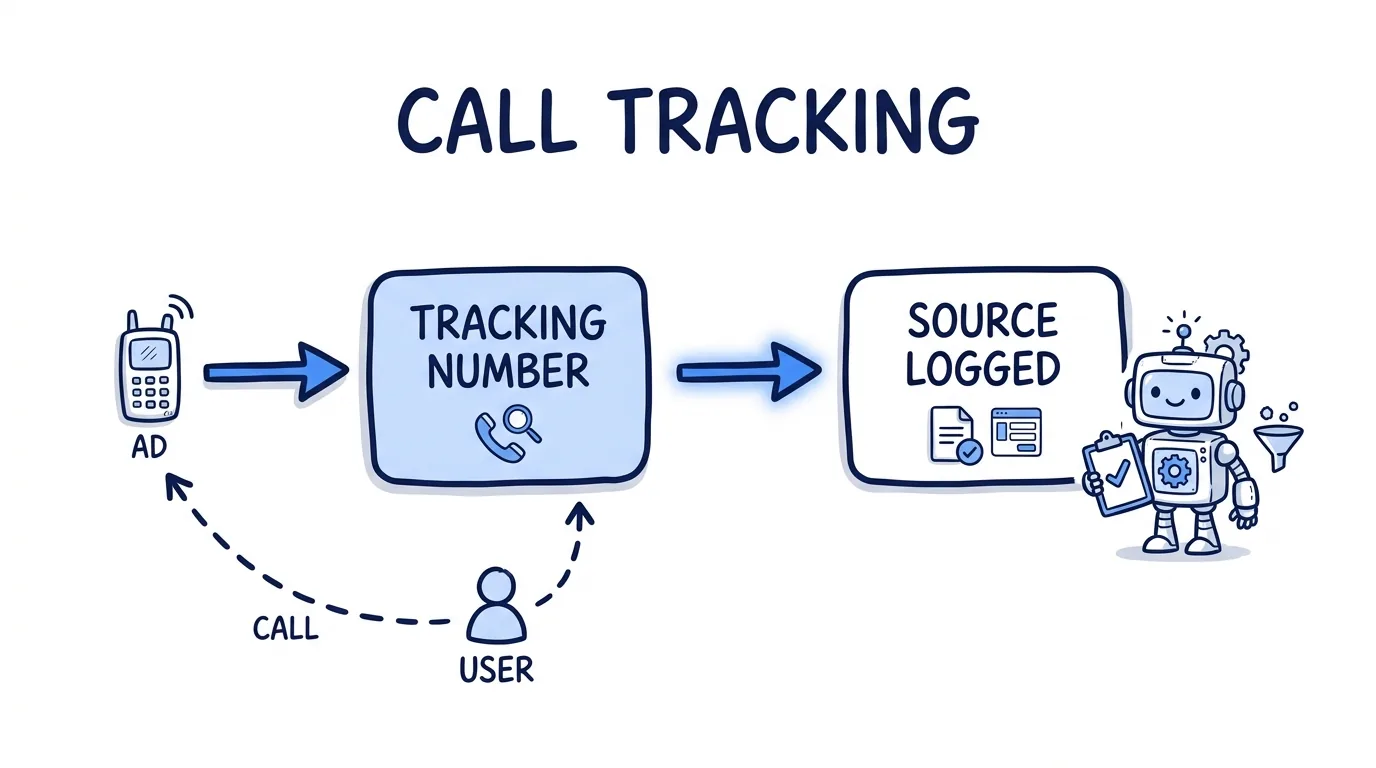
Call tracking is the practice of attributing inbound phone calls to the specific marketing source that generated them. Instead of one business phone number, you use many unique tracking numbers, each tied to a campaign, ad group, landing page, or even an individual website visitor. When someone dials a tracking number, the platform records who called, where they came from, how long they talked, and what happened on the call.
The reason agencies care so much is intent. A person who picks up the phone is further along in the buying journey than someone filling out a form. Invoca reports that 84% of marketers say phone calls have higher conversion rates and larger order values. Call tracking turns that high-intent moment into measurable data you can act on, the same way pay-per-call marketing turns a ringing phone into billable revenue.
How Call Tracking Works
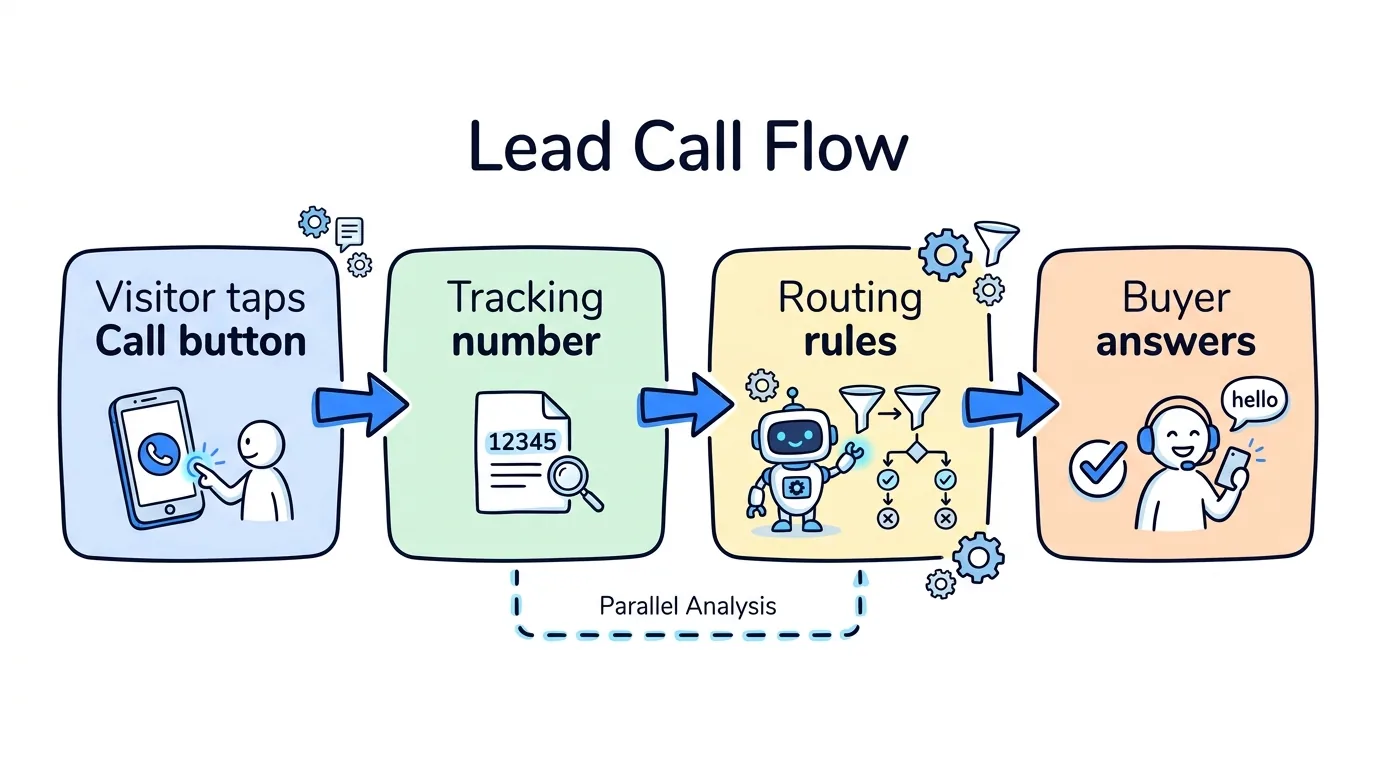
Call tracking follows a clear path from ad to attributed call. The platform assigns numbers, watches who dials them, and records the data behind each call. The flow looks like this:
- Number assignment. You buy a pool of tracking numbers (DIDs) and tie each one to a source: a Google Ads campaign, a Facebook ad, a billboard, a landing page.
- Display. The right number shows up wherever that source lives, whether printed on an ad or inserted dynamically on a web page.
- The call. A prospect dials. The platform logs caller ID, timestamp, area code, and the source the number is mapped to.
- Recording and measurement. The call is recorded and timed, so you can score quality and confirm it meets a buyer's minimum duration.
- Attribution and routing. The data flows to your reporting, and in pay-per-call, the live caller is routed to a buyer through call routing software.
The entire capture happens in real time, so by the time the call connects, the source is already attributed. For a deeper, stage-by-stage breakdown of each step, see how does call tracking work.
Dynamic Number Insertion (DNI)
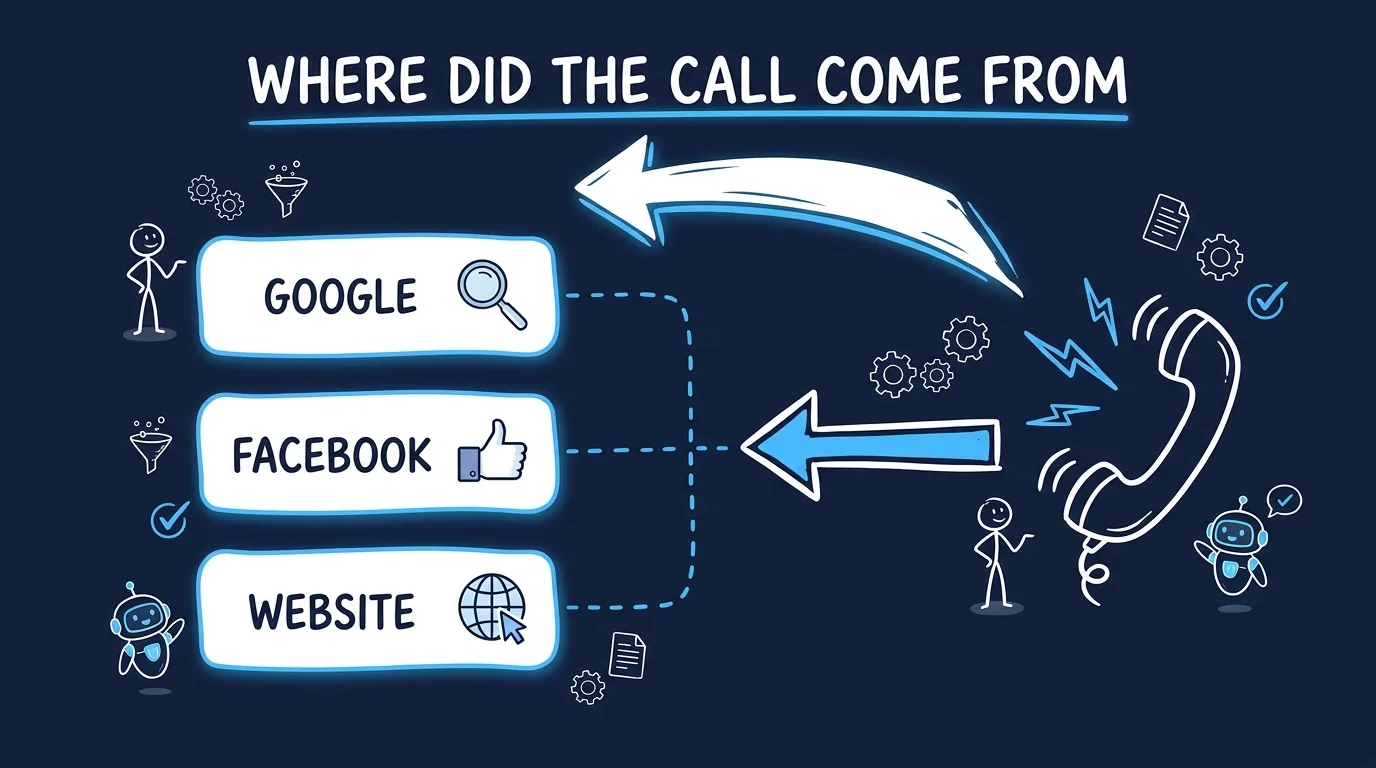
Dynamic Number Insertion is the technology that makes website call tracking precise. Instead of a single static number on your site, DNI uses a small piece of JavaScript to swap the displayed number based on how each visitor arrived. A visitor from a Google search sees one number, a visitor from a Facebook ad sees another. This lets you attribute a phone call all the way back to the exact source, campaign, and keyword that drove the session.
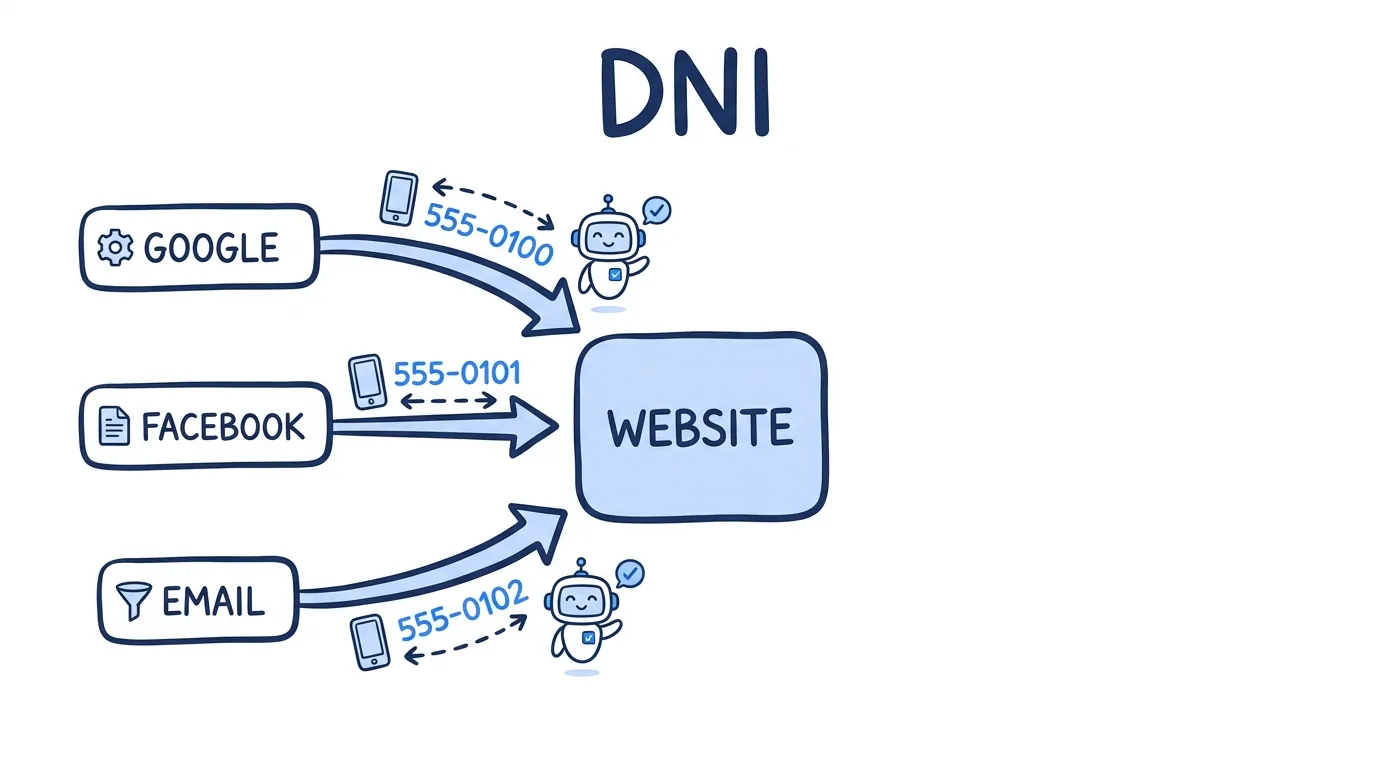
The payoff is keyword-level clarity. You can see that a specific search term produced a call that became a $200 sale, then pause the keywords that produce nothing and scale the ones that ring the phone. Without DNI, you only know "the website" drove calls. With it, you know which click did, which is the same granular feedback loop behind ping-post lead distribution. A common worry is whether the number swap hurts rankings, but it does not when implemented correctly, as we explain in is call tracking bad for SEO.
Inbound Call Tracking and Attribution
Inbound call tracking is the core use case: measuring the calls coming into your business and tying each to its origin. Attribution is the output. It answers the question every agency owner asks, which is "where do my best calls come from?"
A solid attribution record includes the marketing source, the keyword or campaign, the caller's location, the call duration, a recording, and the outcome (sale, qualified, missed). With that data, you stop spreading budget evenly and start funneling it toward the channels that produce qualified calls. Conversion Sciences notes that mobile callers convert at much higher rates than form submissions, so even a modest shift toward call-driving channels can lift revenue. For agencies selling calls, this same record is also the invoice: it proves the call met the buyer's criteria.
Pay Per Call Tracking: Why Agencies Use It
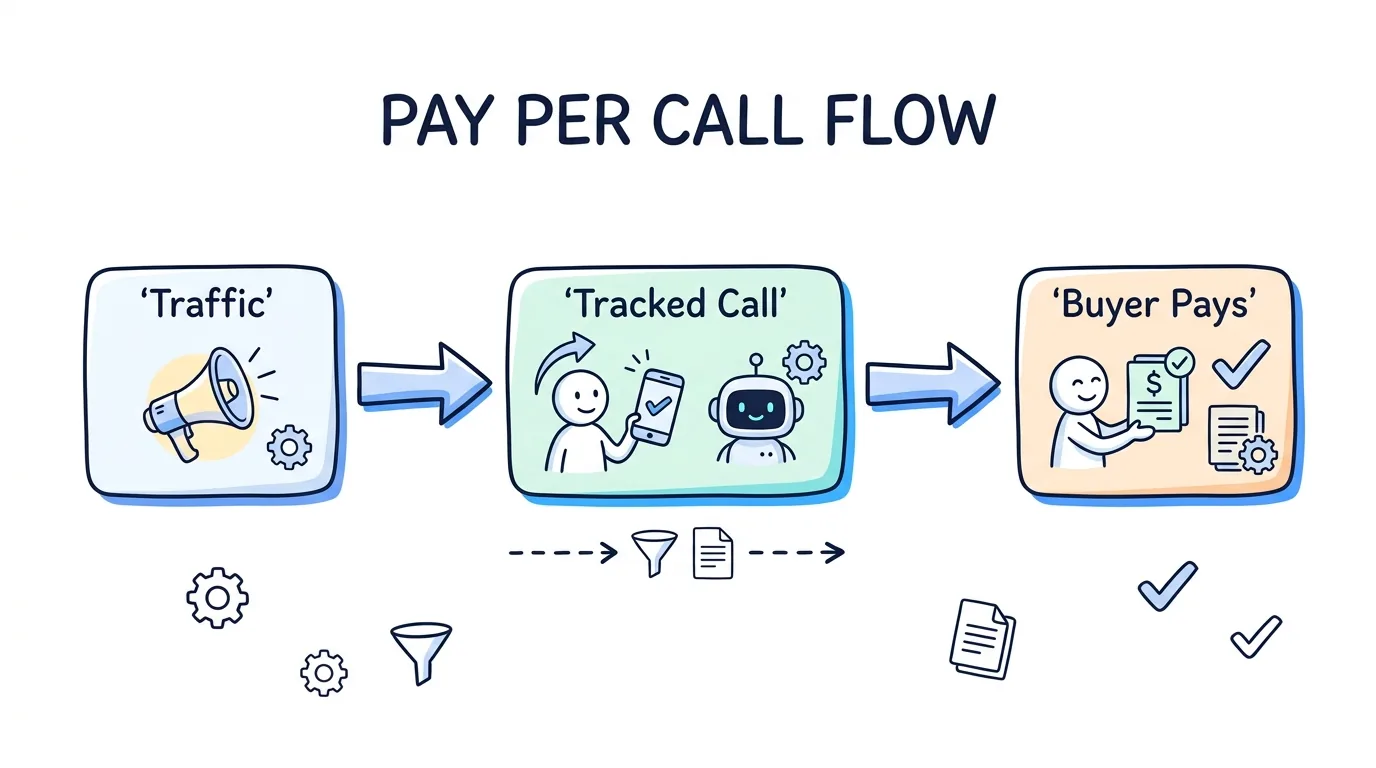
Pay per call tracking is inbound call tracking applied to a buying-and-selling model. The agency generates phone calls through ads, SEO, or offline channels, then sells each qualified call to a buyer such as a law firm, insurance carrier, or home services contractor. Call tracking is what makes that transaction trustworthy on both sides.
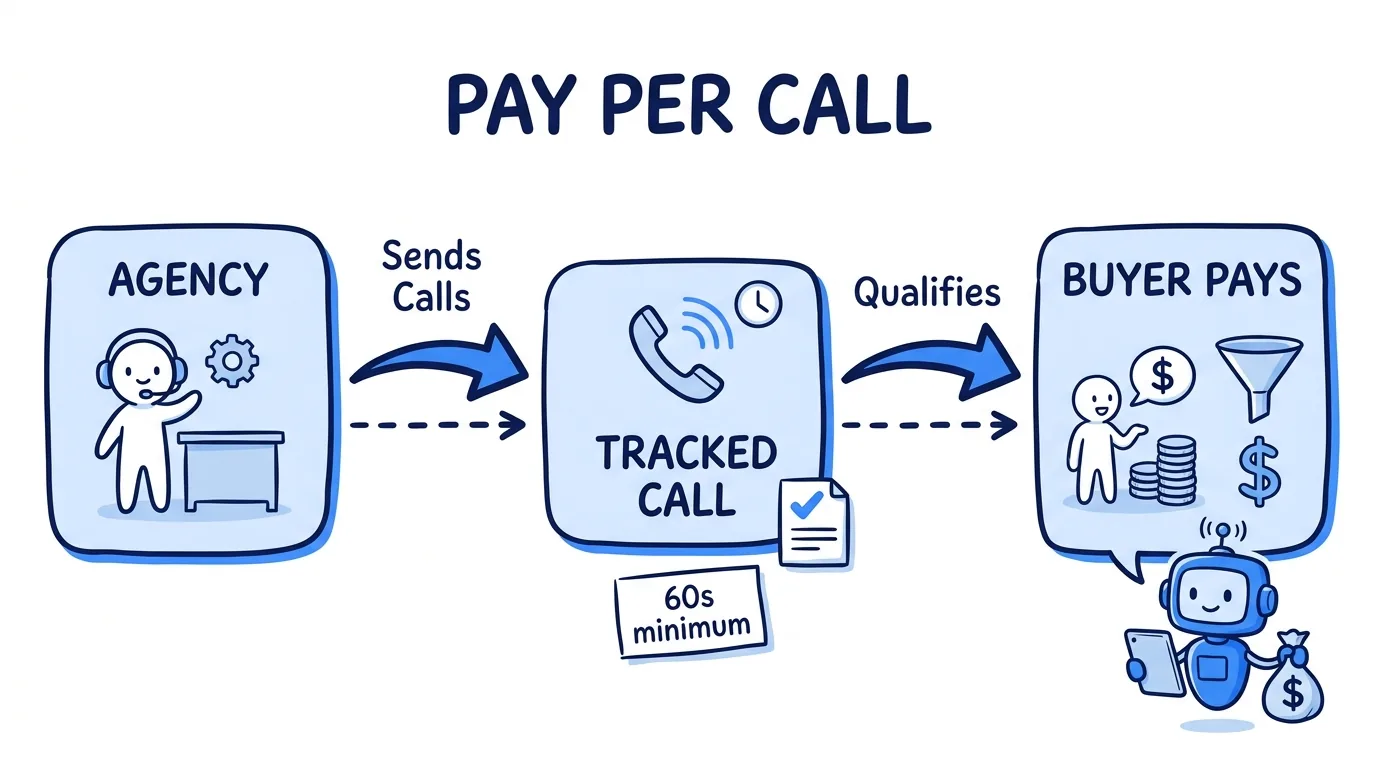
Buyers will only pay for calls that meet their rules, usually a minimum duration of 60 to 120 seconds and a geographic or qualification filter. Tracking the duration, recording the call, and logging the source is how you prove a call was real and qualified. Pair tracking with a buyer waterfall and you route the live caller to the highest-paying buyer with open capacity, the model covered in our guide to the best pay-per-call software for agencies. Lead Distro AI also runs lead scoring on every lead and every call before routing, so low-quality callers get filtered before a buyer ever pays for them.
Call Tracking vs Lead Tracking
Call tracking and lead tracking overlap but are not the same. Call tracking focuses on phone calls: numbers, DNI, recording, duration, and call routing. Lead tracking covers form fills, chat, and other digital captures. Agencies that run both want them in one system so calls and web leads reconcile against the same buyers and budgets.
| Capability | Call Tracking | Lead Tracking (Forms) | Lead Distro AI |
|---|---|---|---|
| Best for | Pay-per-call agencies, call centers, lead buyers and sellers | Form-based pay-per-lead agencies | Both pay-per-call and pay-per-lead agencies |
| Dynamic Number Insertion | Yes | No | Yes |
| Call recording and duration | Yes | No | Yes |
| Source attribution | Yes | Yes | Yes |
| Real-time routing to buyers | Sometimes | Sometimes | Yes (Round Robin, Weighted, Priority/Waterfall, Ping-Post) |
| Pricing model | Usage-based per call | Platform fee | $297/mo platform + usage-based call tracking |
Running both in one platform means one buyer portal, one billing reconciliation, and one set of caps, which is the core idea behind lead and call distribution software.
FAQ
What is call tracking in simple terms?
Call tracking is software that tells you which marketing produced each phone call. Instead of one business number, you use many unique tracking numbers, each tied to an ad, keyword, or page. When someone dials a tracking number, the platform logs the source, records the call, and measures how long it lasted. For lead-generation agencies, this connects ad spend to real, billable calls, so you can scale the campaigns that ring the phone and cut the ones that do not.
How does Dynamic Number Insertion work?
Dynamic Number Insertion (DNI) uses a small piece of JavaScript on your website that swaps the displayed phone number based on how each visitor arrived. A visitor from Google search sees one number, a visitor from a Facebook ad sees another. When the visitor calls, the platform attributes the call to that exact source, campaign, and keyword. This gives session-level and even keyword-level attribution, so you can pause underperforming keywords and double down on the ones that drive calls.
What is inbound call tracking?
Inbound call tracking measures the calls coming into your business and ties each one to the source that produced it. A complete record includes the marketing channel, keyword or campaign, caller location, call duration, a recording, and the outcome. Agencies use inbound call tracking to prove call quality, optimize ad spend toward call-driving channels, and, in pay-per-call, to invoice buyers accurately for calls that meet their duration and qualification rules.
Why do pay-per-call agencies need call tracking?
Pay-per-call agencies sell qualified phone calls to buyers like law firms and insurance carriers. Buyers pay only for calls that meet their rules, usually a minimum duration plus a geographic or qualification filter. Call tracking records the duration, the recording, and the source, which proves a call was real and qualified. That record is both the quality check and the invoice. Paired with routing, it sends each live caller to the right buyer in real time.
How much does call tracking cost?
Call tracking pricing is usually usage-based: a per-number monthly fee plus a per-minute rate for inbound calls. That structure scales with call volume rather than a flat fee, and our call tracking pricing comparison works out the monthly bill at three volumes. Lead Distro AI starts at $147 per month for call tracking only ($297 per month once you add lead distribution), with usage-based call tracking layered on top, and includes a 7-day free trial that requires a credit card. Because inbound calls convert 10 to 15 times more often than web leads, the tracking layer typically pays for itself quickly.
Conclusion
Call tracking is the foundation of every serious phone-lead operation. It assigns unique numbers, swaps them dynamically with DNI, records and measures each call, and attributes it to the marketing that made the phone ring. For a lead-generation agency, that data is what separates profitable scaling from guesswork: you fund the campaigns that produce qualified calls and starve the ones that do not. Pay-per-call agencies take it one step further, using the same tracked call to qualify a live caller and route them to a paying buyer in seconds. Lead Distro AI brings call tracking, lead scoring, and lead-and-call routing into one platform with usage-based call tracking and predictable $297-per-month base pricing.
Want to see which ads actually ring your phone, then route those calls to buyers? Start your 7-day free trial and connect your first tracking number today.
About the Author
Founder & CEO of Lead Distro AI & Great Marketing AI
UC Berkeley graduate and former software engineer at Microsoft. Rafael built Lead Distro AI after managing over $10M in ad spend for performance marketing agencies (pay-per-lead and pay-per-call), including running campaigns for Neil Patel. He combines deep software engineering expertise with hands-on performance marketing experience to build tools that help these agencies scale profitably.
About Lead Distro AI
Lead Distro AI: AI-Powered Routing for Your Leads, Calls, and Appointments
The modern platform for pay-per-lead and pay-per-call agencies. Route, score, and deliver leads with AI-powered automation and real-time P&L tracking. Built for performance marketing agencies and lead buyers across legal, insurance, mortgage, solar, and home services verticals.
4 Distribution Methods
Waterfall, Round Robin, Weighted, Ping-Post
Ping-Post Auctions
Real-time bidding with sub-second routing
Real-Time P&L Reporting
Track revenue, costs, and profit per campaign
Call Tracking
Assign tracking numbers, record calls, and attribute conversions
Lead Scoring
Score every lead before routing to maximize conversion
Partner Portal
Self-serve dashboard for buyers to track leads