Marketing Call Tracking: Attribute Every Call to Its Campaign
Marketing call tracking attributes inbound phone calls to the exact campaign, keyword, and channel that drove them using dynamic number insertion, then scores and routes each call.

Rafael Hernandez
Founder & CEO
Ex-Microsoft SWE · $10M+ PPL ad spend
I hope you enjoy reading this blog post. If you want to try Lead Distro AI for free, click here.
Author: Rafael Hernandez | Founder & CEO of Lead Distro AI
Marketing call tracking is the practice of attributing every inbound phone call to the exact campaign, keyword, channel, and landing page that produced it, so phone calls become measurable conversion events instead of untracked revenue. It works through dynamic number insertion (DNI): a small script swaps the phone number shown on your site for a unique tracking number tied to each visitor's source and session, so when that visitor calls, the platform records which Google Ads keyword, Meta campaign, organic page, or email drove the call. Without it, the calls your marketing generates stay invisible in your reporting, and you optimize ad spend against half your conversions. This matters because phone calls convert to revenue 10 to 15 times more than web leads (BIA/Kelsey, via Invoca). For agencies and marketing teams, call tracking closes the attribution loop, and adding lead scoring plus routing turns each tracked call into a qualified, instantly delivered lead. Lead Distro AI handles all three layers (attribution, scoring, and routing) in one platform. Start your 7-day free trial to set up your first tracking number.
Key Takeaways
- Marketing call tracking attributes phone calls to their source using dynamic number insertion, connecting each call back to the campaign, keyword, channel, and landing page that drove it.
- Phone calls are high-value conversions that convert 10 to 15 times more than web leads, which is why attributing them is essential before optimizing ad budgets (BIA/Kelsey, via Invoca).
- DNI is the core mechanism: a script dynamically replaces your site's phone number with a unique number per visitor session, so attribution survives all the way to the phone call.
- Attribution alone is half the job. Scoring each call for quality and routing it to the right buyer or agent in real time is what turns a tracked call into closed revenue.
- Lead Distro AI combines attribution, rule-based call scoring, and four routing methods (Round Robin, Weighted, Priority/Waterfall, and Ping-Post) so marketing teams and agencies manage tracked calls and data leads in one platform.
- Call tracking pricing has two parts: a flat platform subscription (Lead Distro AI starts at $297/mo) plus usage-based call fees (a per-number monthly fee and a per-minute inbound rate).
What Marketing Call Tracking Actually Does
Marketing call tracking answers a single question your analytics platform cannot: which campaign produced this phone call? Web forms fire a tag the moment they submit, so attribution is easy. Phone calls leave the website entirely, which is why most teams report on form fills and quietly ignore the higher-value channel.
A call tracking platform closes that gap with four functions:
Dynamic number insertion (DNI): Swaps the visible phone number on your page for a unique tracking number based on the visitor's traffic source, so a Google Ads visitor and an organic visitor see different numbers that both ring your business.
Source and session capture: Records the campaign, keyword, ad group, landing page, device, and timestamp tied to the number that was dialed.
Recording and transcription: Captures the conversation (with consent) for quality review and keyword analysis, the foundation of call center call recording software and dedicated sales call recording tools.
Reporting and pushback: Sends call conversions back into Google Ads, Meta, and GA4 so bidding algorithms optimize against calls, not just clicks. For the Google Ads side specifically, see our Google Ads call tracking guide.
How DNI Connects a Phone Call Back to a Keyword
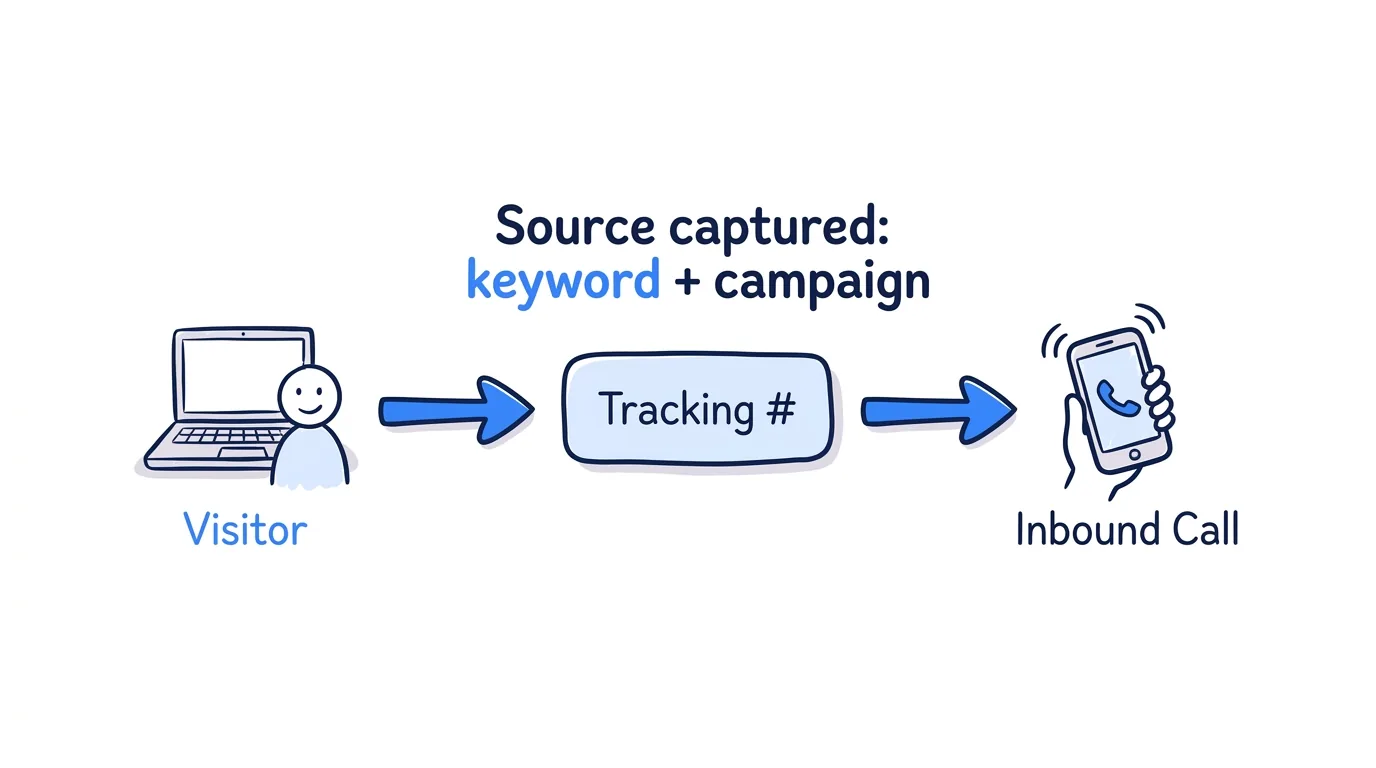
Dynamic number insertion is the engine behind marketing call tracking. When a visitor lands on your page, a small JavaScript snippet reads the referral data (the Google Ads gclid, the UTM parameters, the organic referrer) and replaces the static phone number with a unique number pulled from a rotating pool. That number is reserved to that visitor's session.
When the visitor calls, the platform matches the dialed number back to the stored session and stamps the call with its full marketing origin: the keyword that triggered the ad, the campaign, the ad group, the landing page, and the device. Google's own implementation uses the same principle with forwarding numbers and a minimum call length to count a call as a conversion (Google Ads Help).
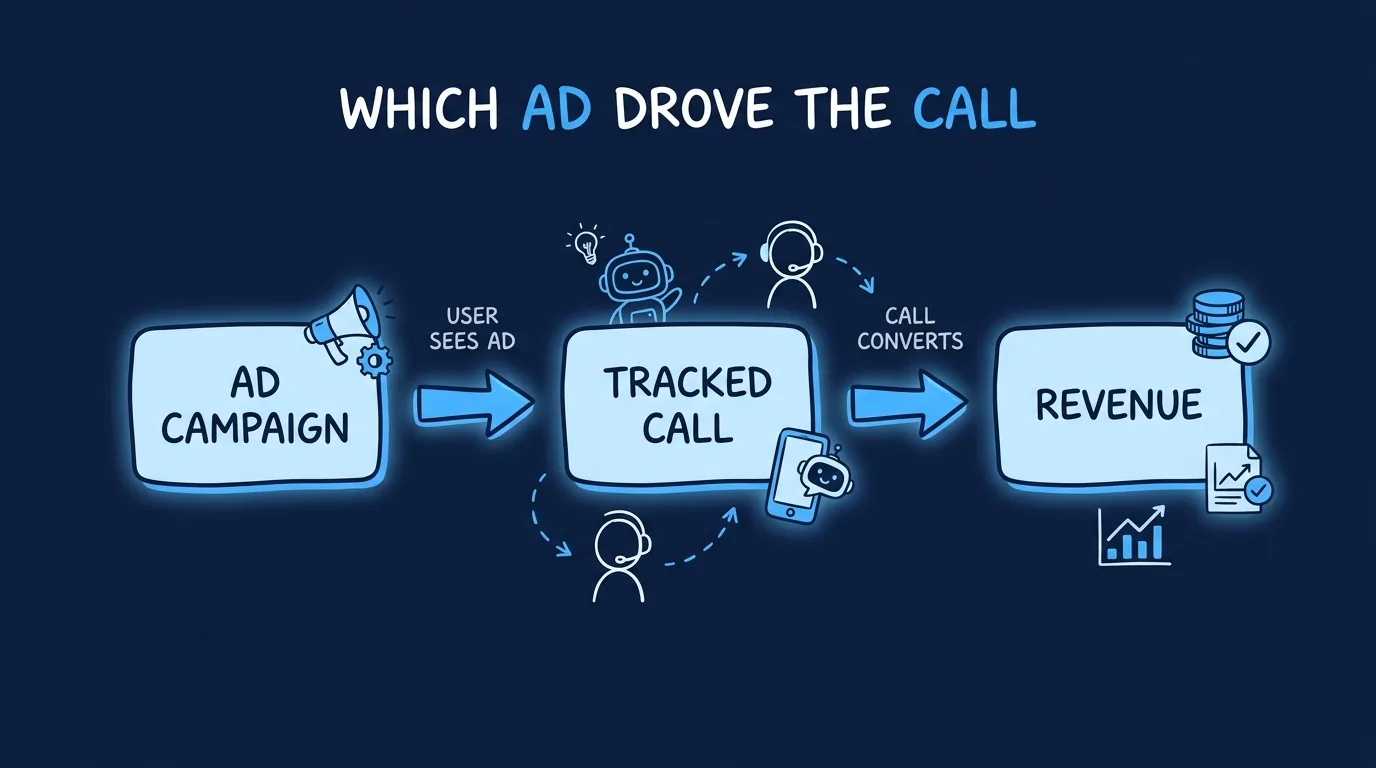
The result is closed-loop attribution. Instead of "we spent $4,000 on this campaign and got 30 form fills," you get "we spent $4,000 and got 30 form fills plus 22 phone calls, 14 of which were qualified." That second number frequently changes which campaigns you scale.
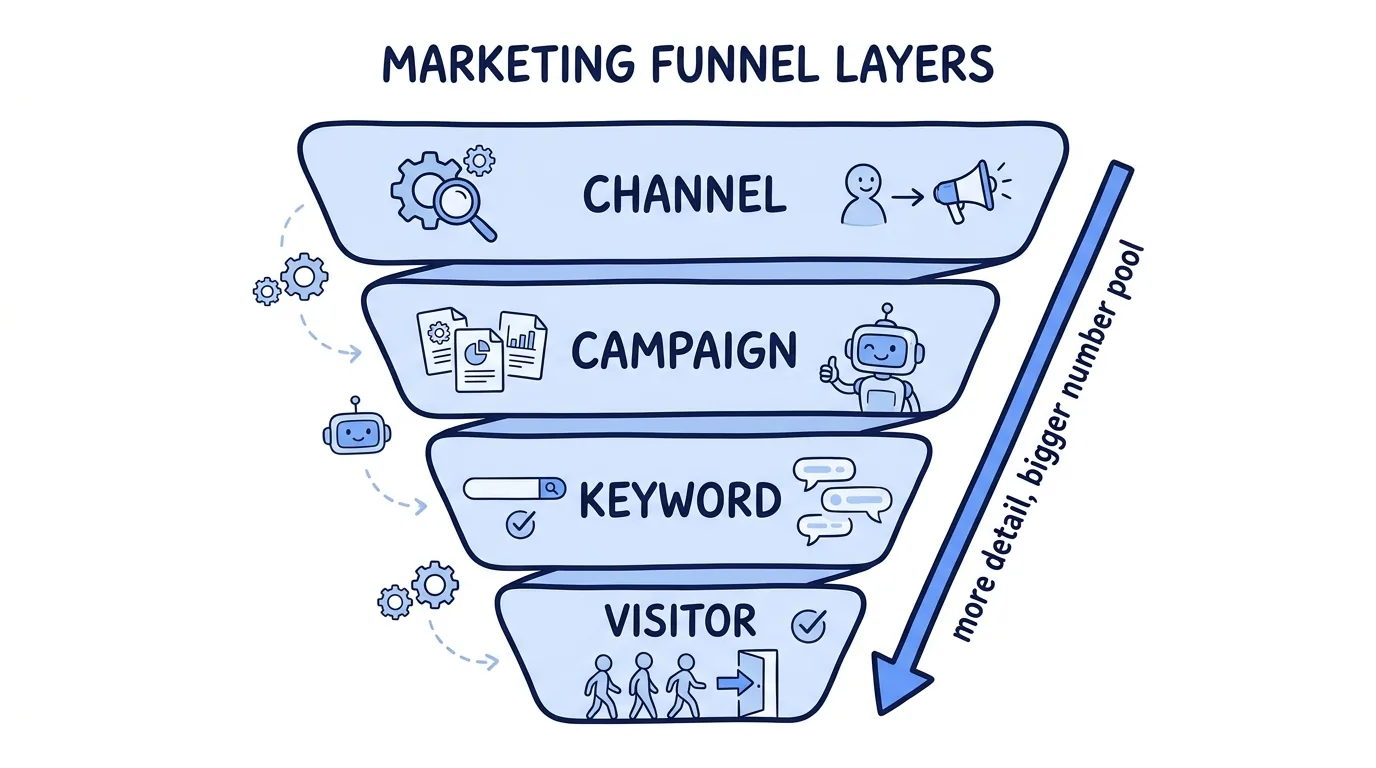
Channel-Level vs Keyword-Level vs Visitor-Level Tracking
Not all call tracking attributes at the same depth. The granularity you choose determines how precisely you can optimize. The deeper the tracking, the larger the number pool you need, which is the practical trade-off.
| Tracking level | What it tells you | Number pool needed | Best for |
|---|---|---|---|
| Channel-level | Which channel drove the call (paid, organic, social, direct) | Small (one per channel) | Lean budgets, early-stage attribution |
| Campaign-level | Which campaign or ad set drove the call | Medium | Most agencies and marketing teams |
| Keyword-level | Which exact keyword triggered the call | Large (rotating pool) | High-spend paid search accounts |
| Visitor-level | The full session and journey of the individual caller | Largest | Pay-per-call agencies, ROI-per-lead reporting |
Visitor-level tracking is what pay-per-call and pay-per-lead agencies need, because they have to prove the source and quality of every single billable call, not just an aggregate channel total.
Why Attribution Alone Is Not Enough
Knowing a call came from a campaign is the first half of the job. The second half is what happens in the seconds after the phone rings: is this caller worth a live agent's time, and who should handle the call?
This is where most attribution-only tools stop, and where revenue leaks. A tracked call that rings an unavailable agent, sits in voicemail, or routes to a buyer already at their daily cap is a wasted high-value conversion. Speed and routing decide whether attribution turns into closed business.
Lead Distro AI adds two layers on top of attribution:
Lead scoring: Lead Distro AI scores every lead and every call the moment it comes in, rating intent and quality so unqualified calls are filtered before they reach a buyer or agent.
Real-time routing: Each scored call is routed using one of four distribution methods (Round Robin, Weighted, Priority/Waterfall, or Ping-Post), so the highest-priority available buyer or agent receives the live call and nothing drops into a black hole.
The lead and call distribution software guide covers how the call side and the data lead side share one routing engine.
How Lead Distro AI Tracks, Scores, and Routes a Call
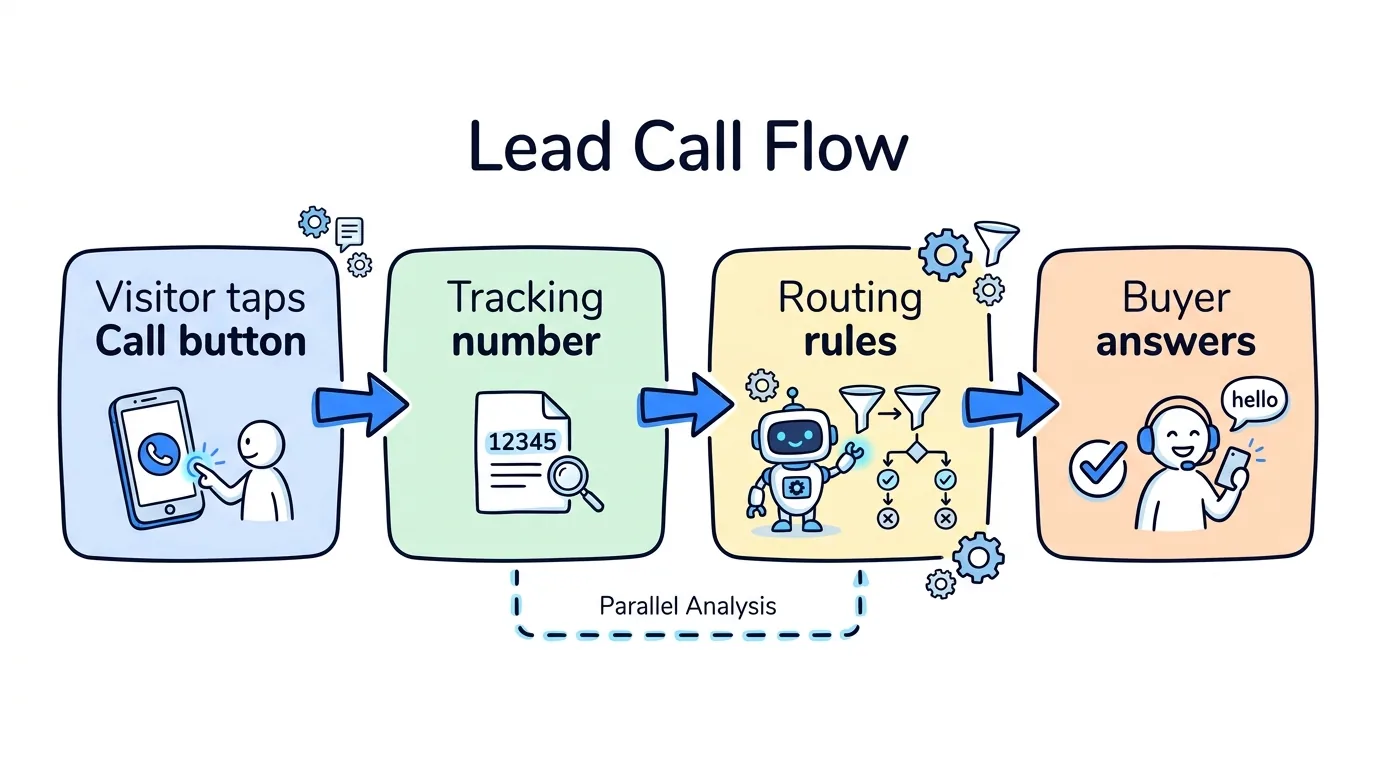
The full flow inside Lead Distro AI moves a tracked call from a click to a connected buyer in seconds:
- A visitor arrives from a campaign, and DNI shows them a unique tracking number tied to that source.
- The visitor calls; the platform stamps the call with its full marketing origin (keyword, campaign, landing page).
- Lead Distro AI scores the call for quality and intent in real time.
- The scored call routes to the right buyer or agent using Round Robin, Weighted, Priority/Waterfall, or Ping-Post distribution.
- If the first destination is unavailable or at cap, the call waterfalls to the next eligible buyer instead of dropping.
- The reporting dashboard ties revenue back to the original campaign, closing the loop.
For agencies that resell calls, the same dashboard handles inbound calls and data leads together, so a single buyer can receive both call inventory and form leads. The interactive product tour walks through the routing flow end to end. For agencies built specifically around phone traffic, the call routing software guide goes deeper on routing logic.
Setting Up Marketing Call Tracking the Right Way
Getting clean attribution depends on a few setup decisions that teams often get wrong:
Size the number pool to your traffic. Keyword-level and visitor-level tracking need enough numbers in rotation that two simultaneous visitors never share one. Undersized pools cause misattribution.
Push conversions back to ad platforms. Attribution is only actionable if Google Ads and Meta receive the call conversions, so their algorithms bid toward call-driving keywords. Without pushback, you see the data but the platforms cannot act on it.
Set a sensible minimum call length. A 12-second call is rarely a real conversion. A 60-to-90-second minimum filters wrong numbers and hang-ups from your conversion counts.
Handle consent and compliance. Inbound calls (where the consumer dials you) carry lighter consent requirements than outbound, but recording disclosure and state two-party-consent rules still apply. Pair tracking with consent documentation before scaling.
For agencies comparing platforms built for phone traffic, the best call tracking software for pay-per-call agencies breakdown evaluates the agency-grade options side by side.
FAQ
What is marketing call tracking?
Marketing call tracking is the practice of attributing inbound phone calls to the marketing source that drove them. Using dynamic number insertion, a platform assigns a unique tracking number to each visitor based on their traffic source, then matches every call back to its originating campaign, keyword, channel, and landing page. This lets marketing teams measure phone-call conversions the same way they measure form fills, so ad spend can be optimized against the full set of conversions rather than only the trackable web leads.
How does dynamic number insertion (DNI) work?
DNI uses a JavaScript snippet on your website that reads each visitor's referral data (the Google Ads click ID, UTM parameters, or organic referrer) and swaps the displayed phone number for a unique tracking number from a rotating pool. That number is reserved to the visitor's session. When the visitor calls, the platform matches the dialed number to the stored session and stamps the call with its full marketing origin. The visitor reaches your real business line; the swap is invisible to them and only exists to preserve attribution.
Is marketing call tracking worth it for small budgets?
Yes, especially if any meaningful share of your conversions arrive by phone. Phone calls convert to revenue 10 to 15 times more than web leads, so leaving them unattributed means optimizing your budget against an incomplete picture. Smaller budgets can start with channel-level or campaign-level tracking, which needs only a small number pool, then move to keyword-level tracking as paid search spend grows. The goal is to stop scaling campaigns blindly when half their value shows up on the phone, not in a form.
Does call tracking integrate with Google Ads and GA4?
Yes. Call tracking platforms commonly push call conversions back into Google Ads and GA4. Google Ads can dynamically insert a forwarding number and count a call as a conversion once it passes a minimum call length, and third-party platforms send call conversions through conversion import so the bidding algorithm optimizes toward call-driving keywords. Pushing conversions back is the step that makes attribution actionable rather than just reportable. Lead Distro AI ties tracked calls back to the campaign and channel in its reporting dashboard.
How is call tracking priced?
Call tracking pricing has two components. The first is a flat platform subscription, which for Lead Distro AI starts at $297 per month. The second is usage-based: a per-number monthly fee for each tracked phone number, plus a per-minute rate for inbound calls, billed on top of the subscription. At higher call volumes, usage fees can exceed the platform fee, so always request the per-number and per-minute rates in writing before signing, and size your number pool to your real concurrent traffic.
What is the difference between call tracking and pay-per-call?
Call tracking attributes inbound calls to the marketing source that drove them so spend can be measured against revenue. Pay-per-call is a monetization model built on top of that: an agency drives or buys inbound calls, then routes and sells each call to a buyer, often through real-time bidding. Call tracking tells you where calls came from; pay-per-call turns those calls into a buyer-and-seller marketplace. Lead Distro AI supports both, which is why the same platform serves marketing teams attributing their own calls and agencies reselling call inventory.
Conclusion
Marketing call tracking turns invisible phone calls into attributable conversions, and that single change reshapes how you spend. When you can see that a campaign drove 22 calls on top of its form fills, and that 14 of those calls were qualified, you scale the channels that actually produce revenue instead of the ones that merely produce clicks. Dynamic number insertion is the mechanism that makes it possible, carrying attribution from the keyword all the way to the connected call.
Attribution is the foundation, but scoring and routing are what convert tracked calls into closed business. Lead Distro AI combines all three: DNI-based attribution, lead scoring on every call, and four routing methods that deliver each call to the right buyer or agent in real time. Marketing teams use it to attribute their own calls; pay-per-call and pay-per-lead agencies use it to score, route, and resell call inventory alongside data leads.
To see how attribution, scoring, and routing work in one flow, take the interactive product tour, or start your 7-day free trial and set up your first tracking number today. Credit card required.
Ready to attribute, score, and route every inbound call in one platform? Start your 7-day free trial and set up your first tracking number in minutes. Credit card required.
About the Author
Founder & CEO of Lead Distro AI & Great Marketing AI
UC Berkeley graduate and former software engineer at Microsoft. Rafael built Lead Distro AI after managing over $10M in ad spend for performance marketing agencies (pay-per-lead and pay-per-call), including running campaigns for Neil Patel. He combines deep software engineering expertise with hands-on performance marketing experience to build tools that help these agencies scale profitably.
About Lead Distro AI
Lead Distro AI: AI-Powered Routing for Your Leads, Calls, and Appointments
The modern platform for pay-per-lead and pay-per-call agencies. Route, score, and deliver leads with AI-powered automation and real-time P&L tracking. Built for performance marketing agencies and lead buyers across legal, insurance, mortgage, solar, and home services verticals.
4 Distribution Methods
Waterfall, Round Robin, Weighted, Ping-Post
Ping-Post Auctions
Real-time bidding with sub-second routing
Real-Time P&L Reporting
Track revenue, costs, and profit per campaign
Call Tracking
Assign tracking numbers, record calls, and attribute conversions
Lead Scoring
Score every lead before routing to maximize conversion
Partner Portal
Self-serve dashboard for buyers to track leads